Launch offer — valid today only

📄 Digital book in PDF · read it on your phone or print it

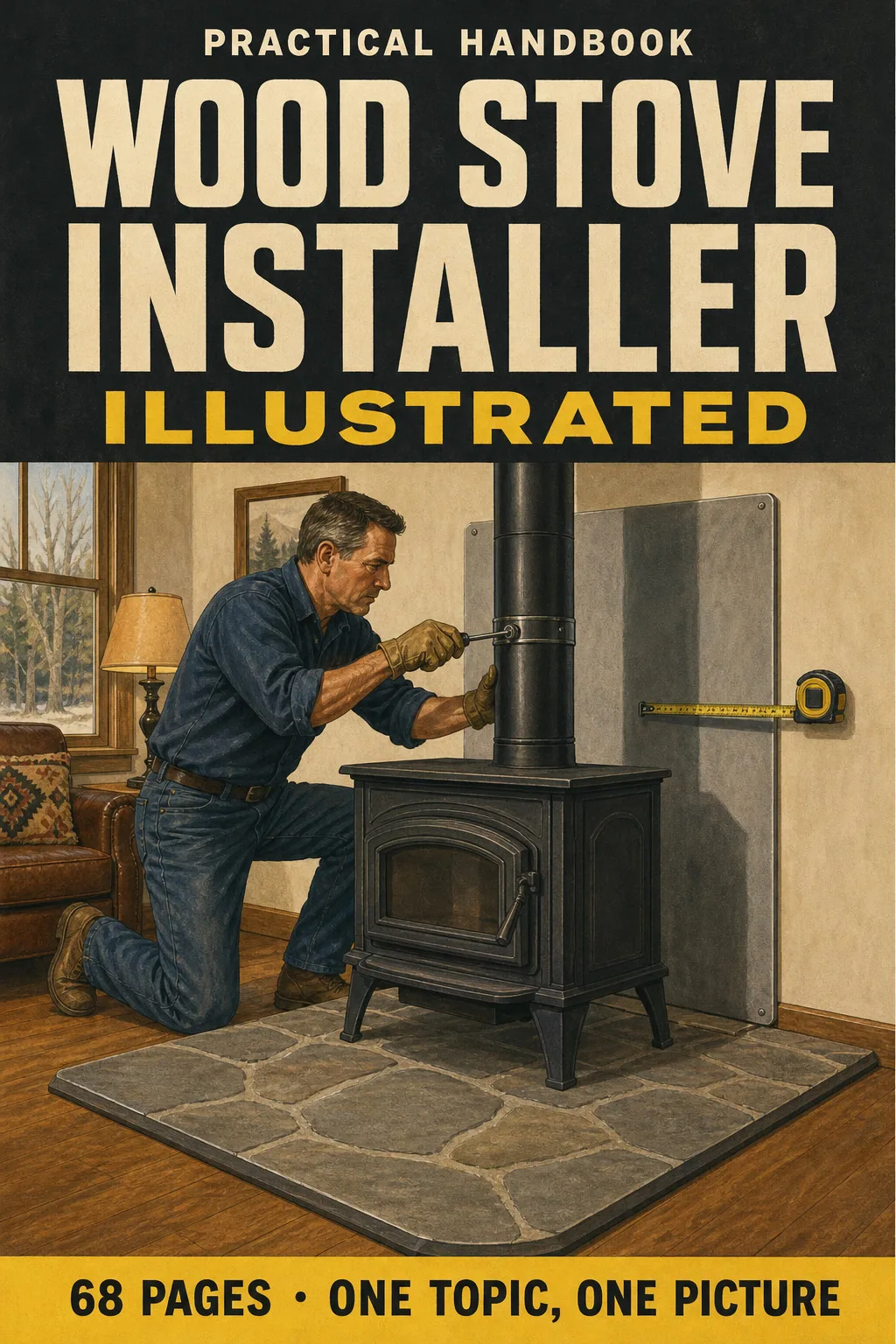
The NFI Woodburning Exam and NFPA 211, in Drawings One Topic on Every Page

Draft, chimney types, connectors, clearances to combustibles, hearth pad R-values, inserts, inspection levels and creosote. One topic per page: the drawing first, then the numbers, so you review the install in the same order you build it. 68 illustrated pages.

START STUDYING THIS WAY

🔒 Secure checkout · PDF by email · 30-day guarantee

Every topic, its own pageEvery clearance and every vent part drawn, with the explanation beside it
68 illustrated pages9 parts, from how wood burns to the install sequence
Up-to-date sourcesNFPA 211, IRC Chapter 10 and the UL listing standards
PDF by emailFormat

Look Inside the Book

Each page has one large drawing and a box with the clearances, numbers and steps you need to know:

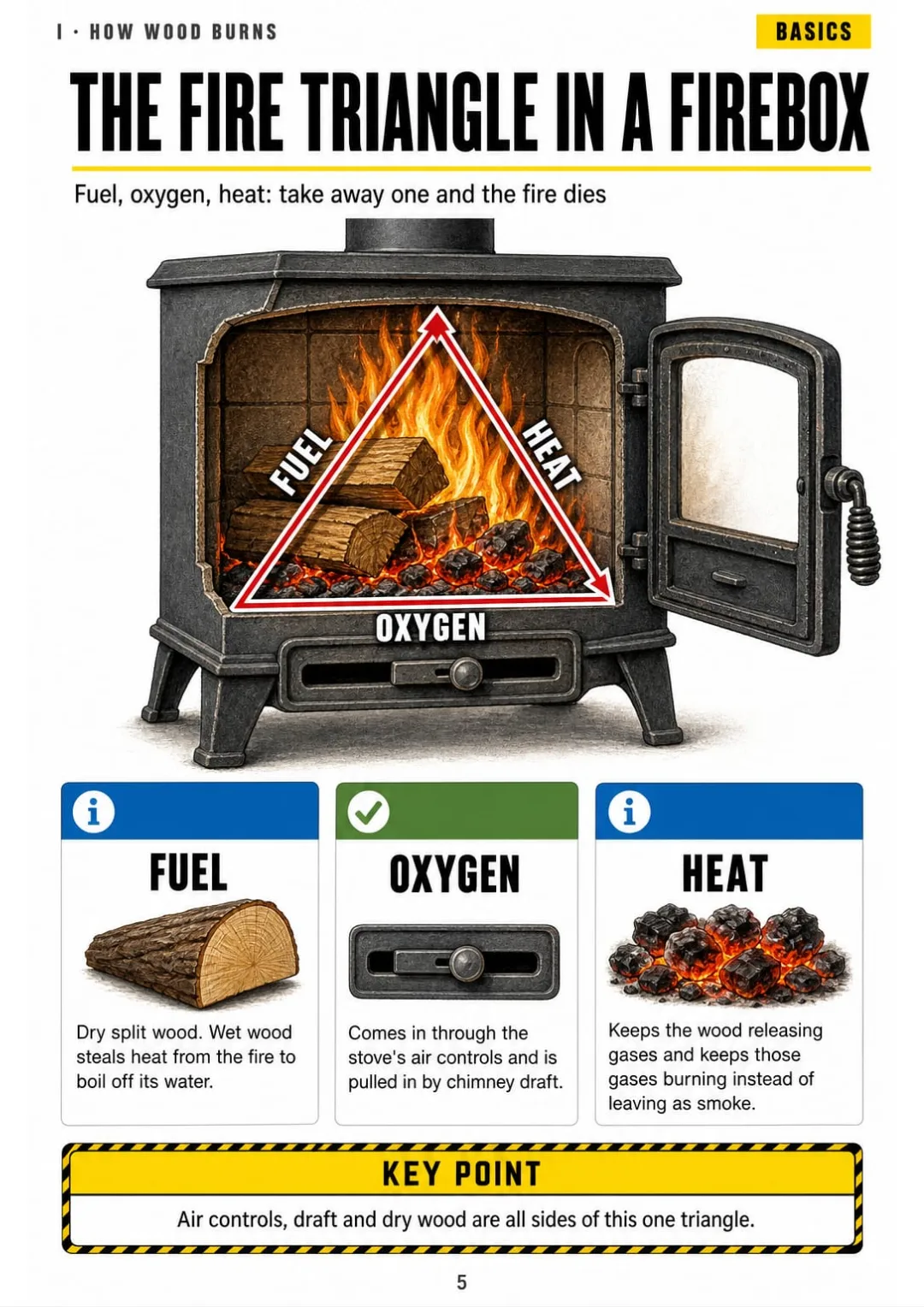
Fuel, oxygen and heat in one stove cutaway: remove one side, the fire goes out.
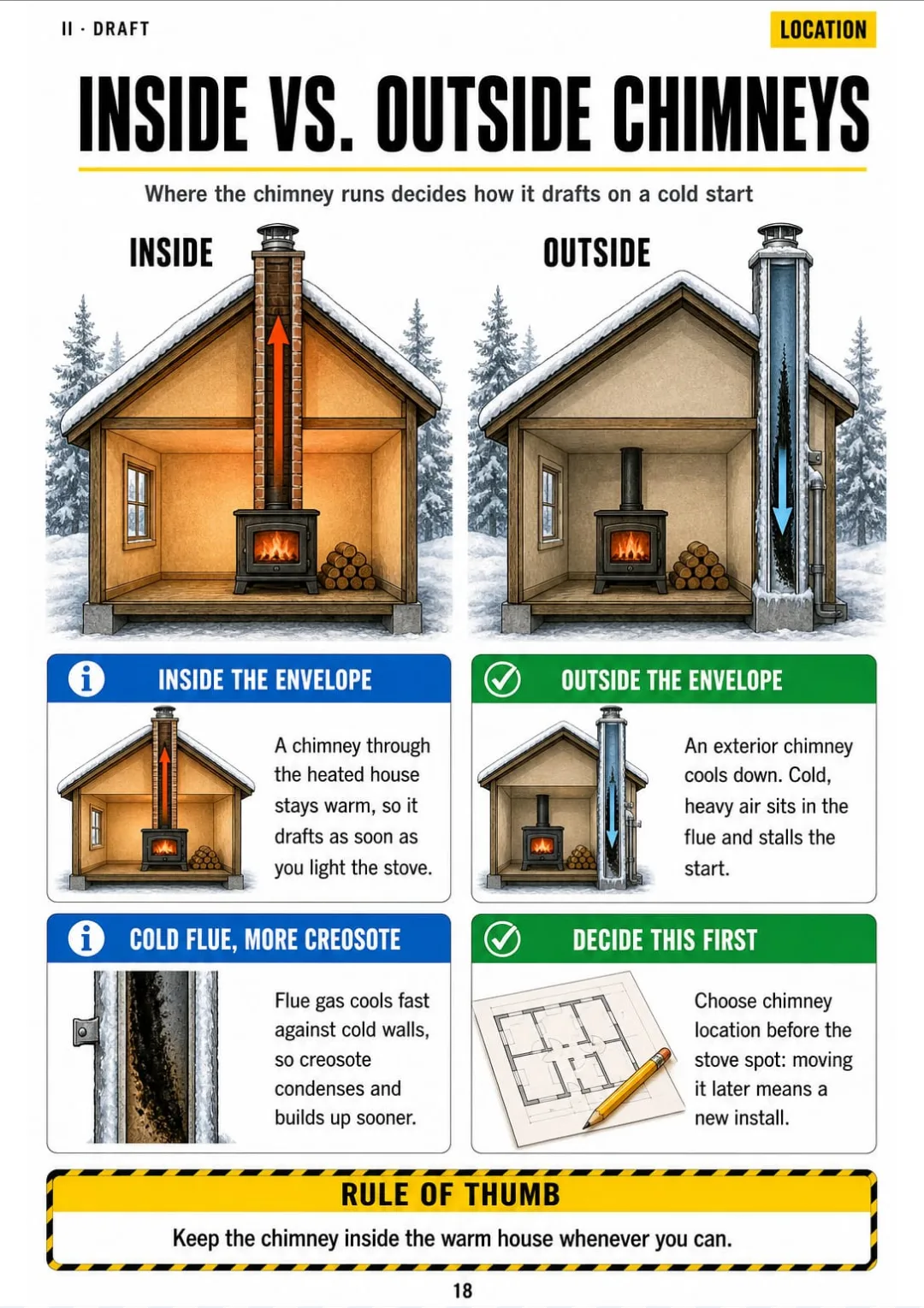
Inside chimney stays warm and drafts; outside chimney stalls and collects creosote.
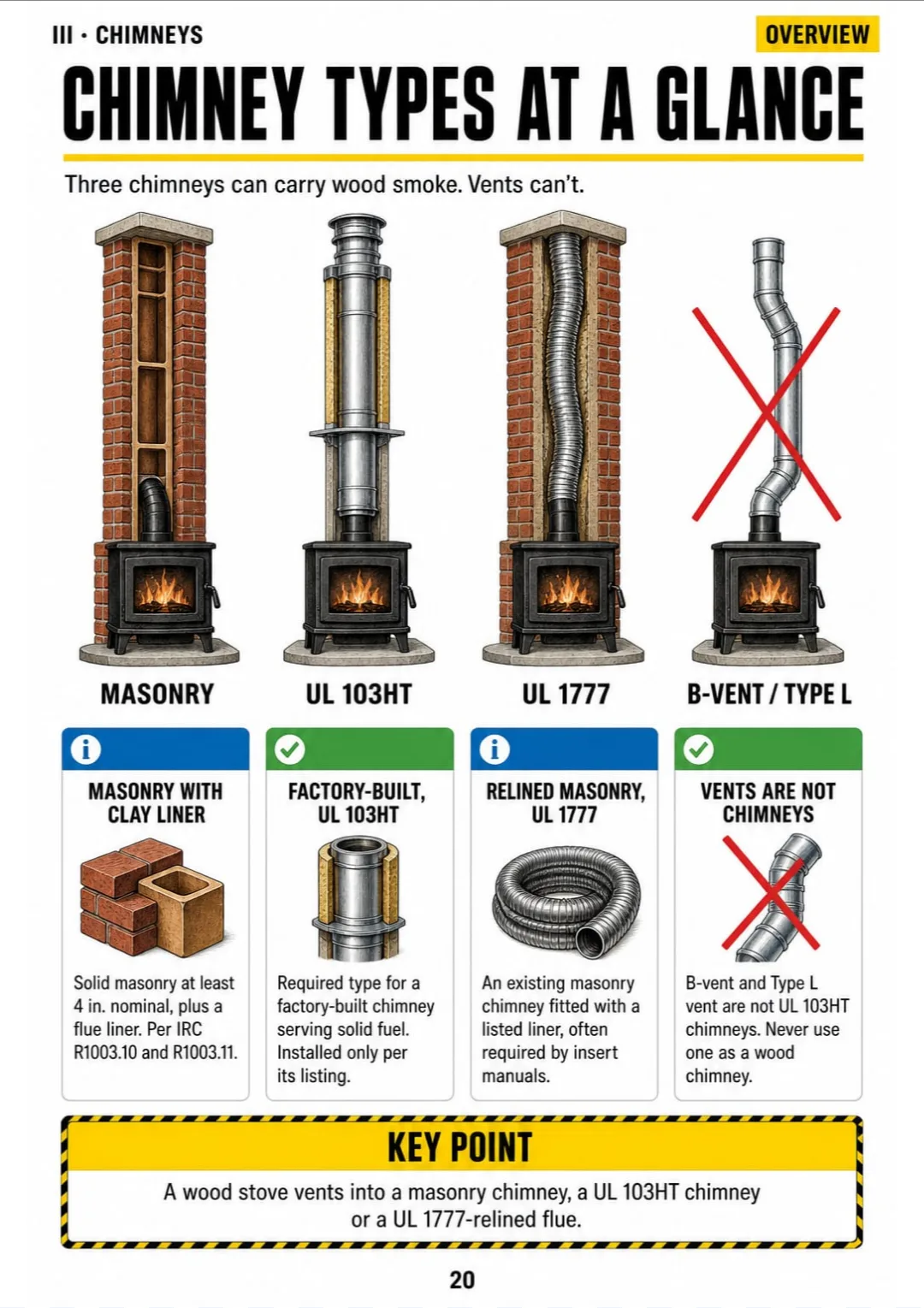
Masonry, UL 103HT or UL 1777 liner: the only three ways to vent a wood stove
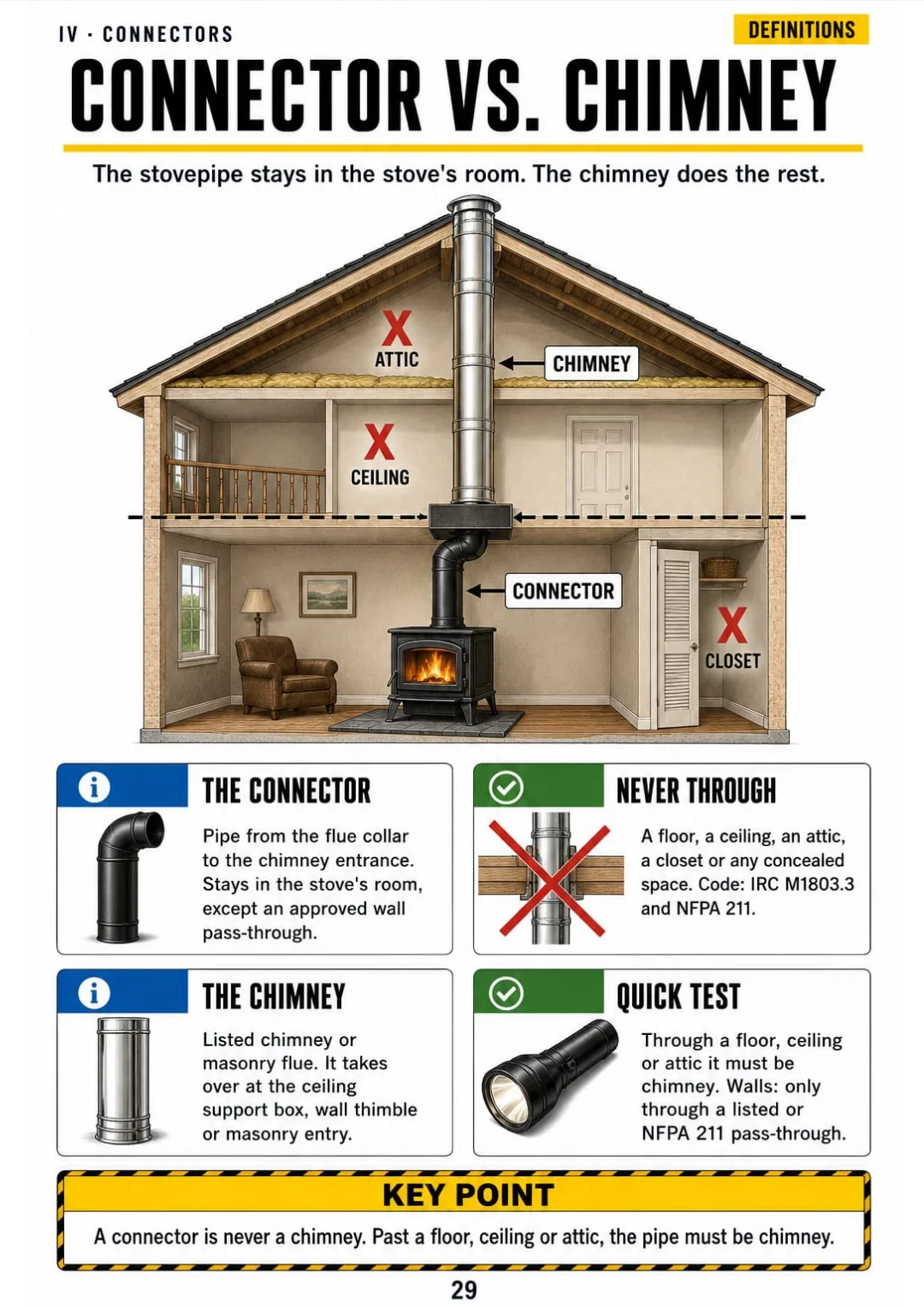
Connector = flue collar to chimney, same room only; never through a ceiling, attic or closet (IRC M1803.3, NFPA 211).
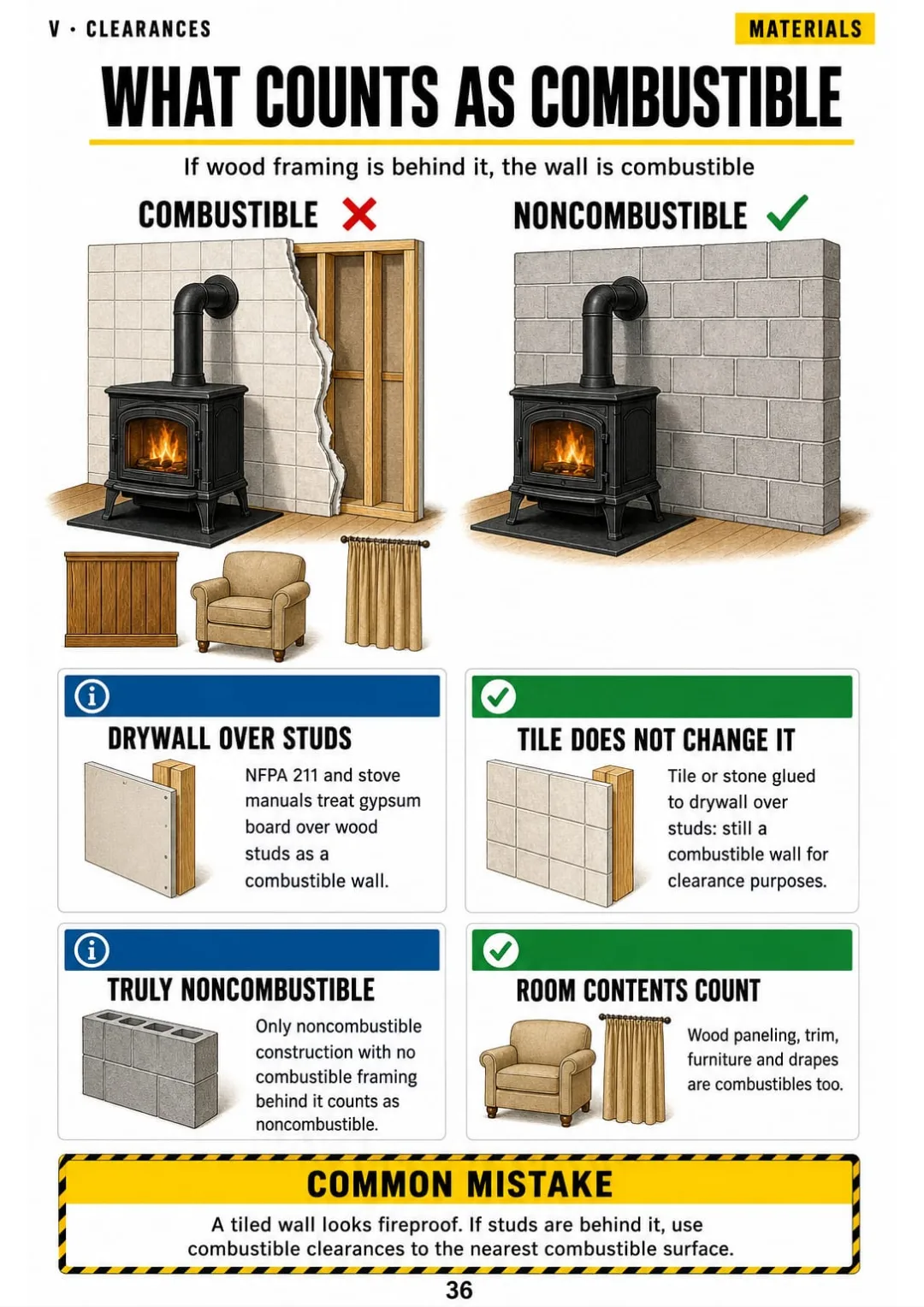
Drywall over wood studs = combustible wall, even with tile on it.
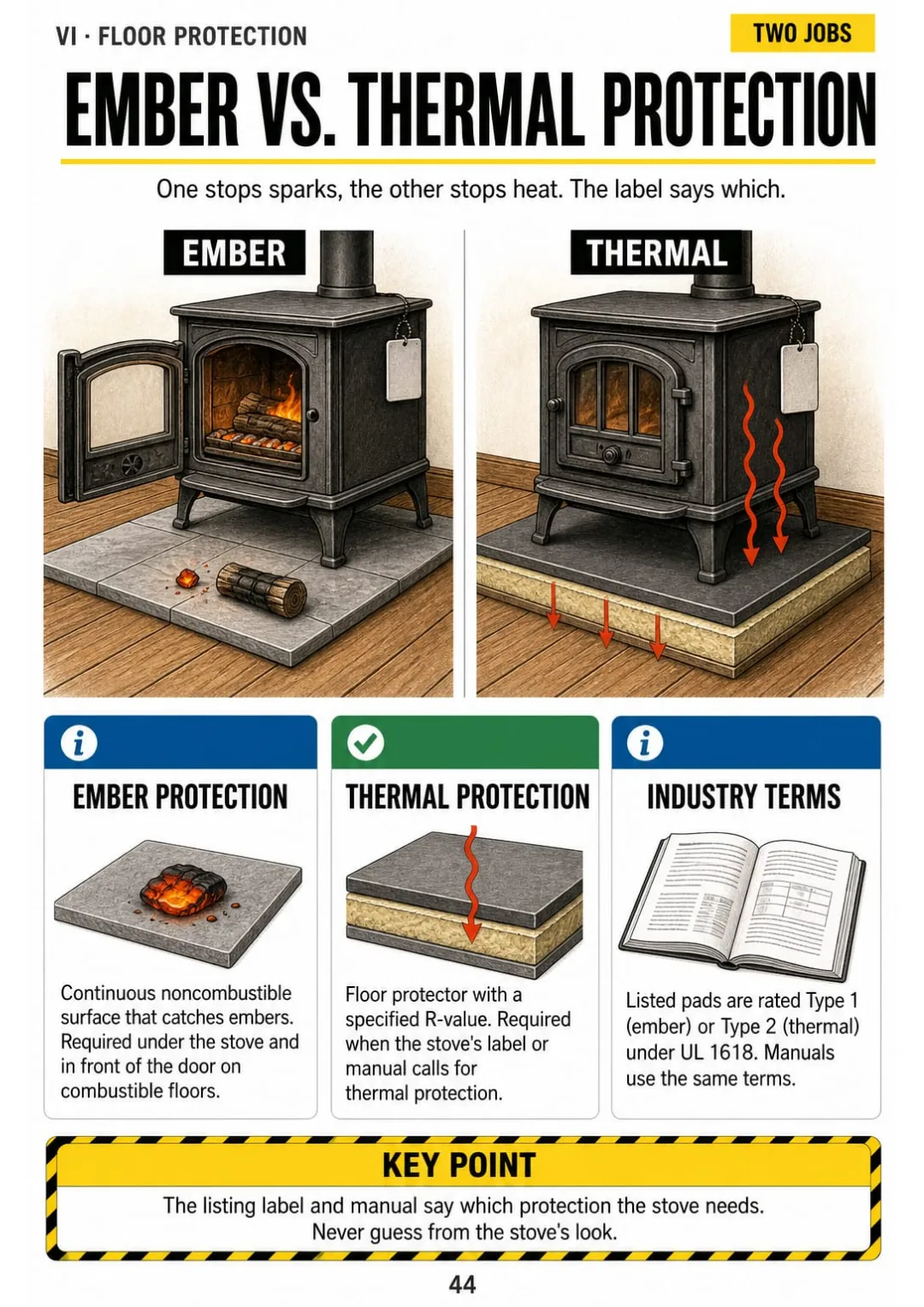
Ember protection catches sparks; thermal protection has an R-value. The label tells you which one.
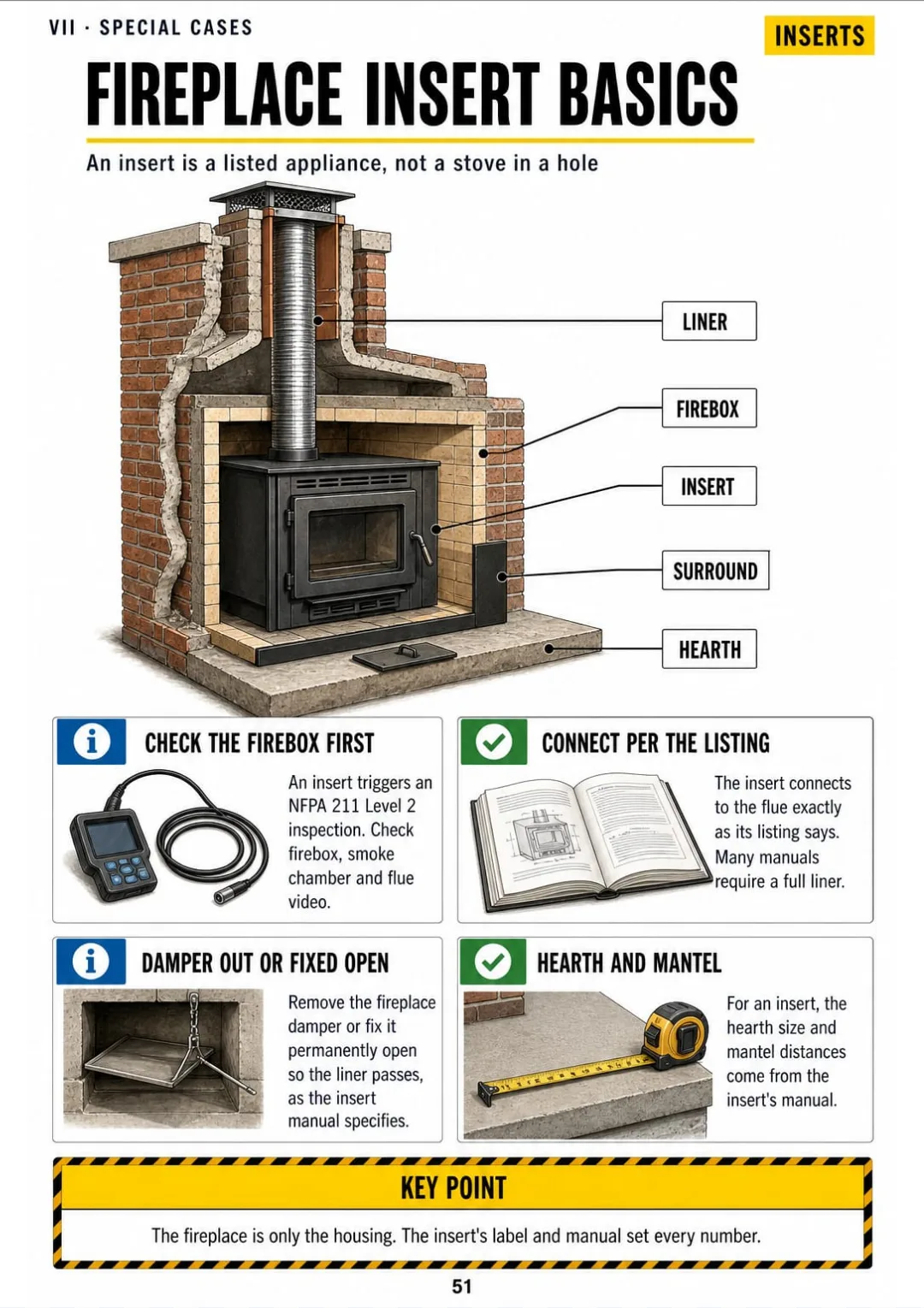
Insert = listed appliance: Level 2 inspection first, then connect per the listing.
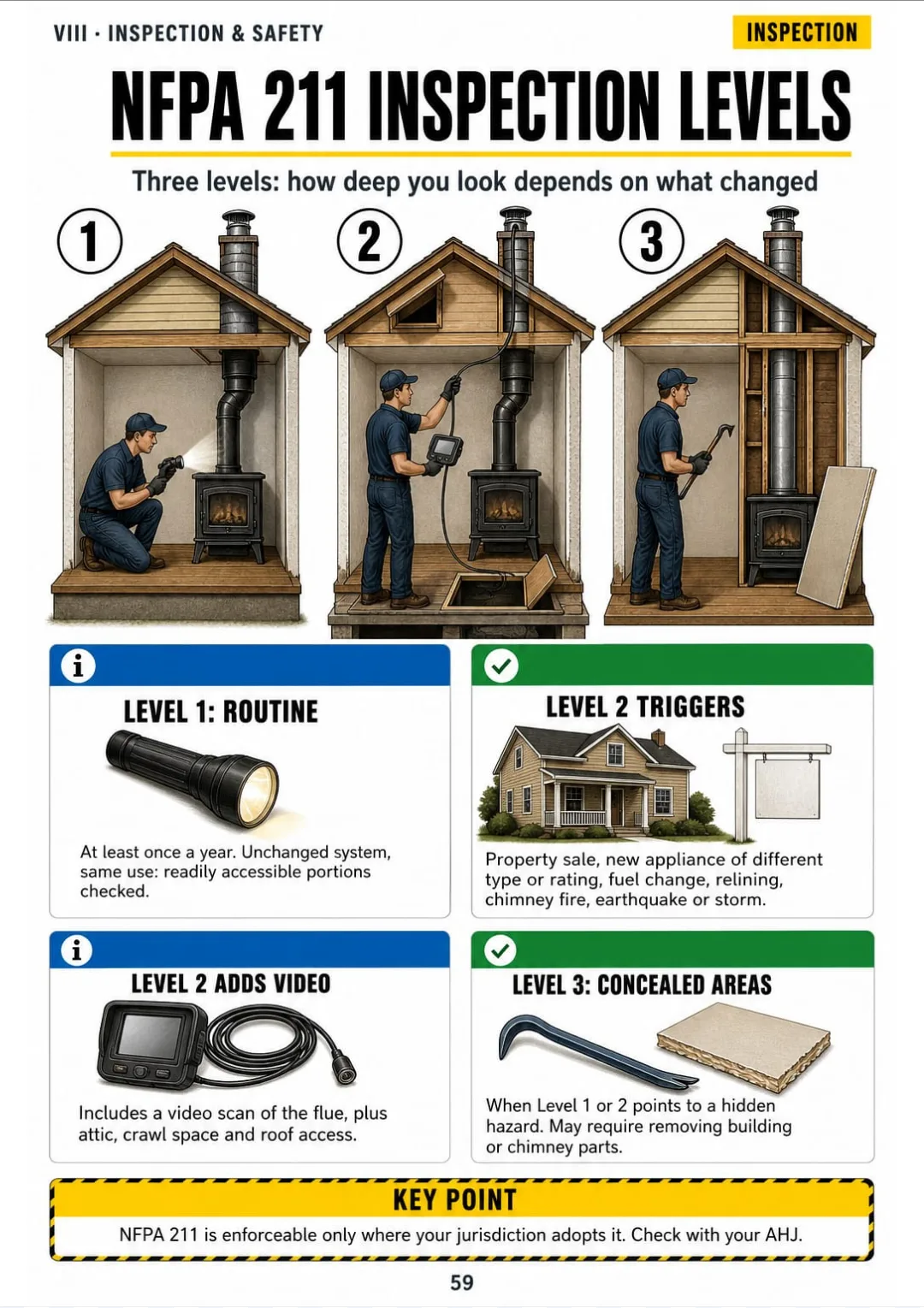
Level 1 yearly · Level 2 after a sale, new appliance, relining or chimney fire · Level 3 opens concealed areas

Swipe to see more →

These are real pages from the book. The table of contents is the full one: 9 parts and 64 topics.

The Problem Isn't You. It's How It Was Explained to You.

You're standing in a customer's living room, looking at an old chimney, and they ask: can my new stove go into that, or do I need something else?

The study manual spreads it over several chapters: masonry here, factory-built there, relining somewhere else. Three chimney types, explained in paragraphs that never sit side by side.

Masonry, UL 103HT or UL 1777 liner: the only three ways to vent a wood stove

In this book, that topic is one page: masonry, a UL 103HT factory-built chimney and a UL 1777 liner, drawn next to each other in cross-section. The only three ways to vent a wood stove, at a glance.

Same with stack effect, connector vs. chimney, what counts as combustible, ember vs. thermal protection and the NFPA 211 inspection levels: each one has its own page.

You see which chimney you're looking at, you know what it needs, and you answer the customer without going back to the manual.

COMPARE FOR YOURSELF

The Same Topic, Two Ways to Study It

THIS
  • The manual: line after line
  • Draft and venting explained only in words
  • You walk into the exam still unsure
Draft in a chimney is produced by the difference in density between the column of heated flue gases and the cooler, denser air surrounding the structure. As flue gas temperature increases relative to ambient temperature, the resulting pressure differential increases accordingly, and this differential is further influenced by the effective height of the venting system. Conversely, when the flue is cold or of insufficient height, available draft is reduced, which may result in the spillage of combustion products into the living space through the loading door.
FOR THIS
  • Stack effect in one drawing
  • The numbers in a box
  • You see it and you get it
Inside chimney stays warm and drafts; outside chimney stalls and collects creosote.
CONTENTS

Take a Look at the 9 Parts and 64 Topics

How wood burns, draft, chimneys, connectors, clearances, floor protection, inserts and special cases, inspection and safety, and the install sequence: 68 pages, all illustrated

IHow Wood Burns · pp. 5-12
  1. The Fire Triangle in a Firebox
  2. The Three Stages of Burning Wood
  3. Why Dry Wood Is Not Optional
  4. Primary and Secondary Air
  5. Catalytic vs. Non-Catalytic Stoves
  6. EPA Certification and the 2020 Limit
  7. How Heat Moves: Conduction, Convection, Radiation
  8. Pyrolysis of Combustibles: Why Distance Matters
IIDraft · pp. 13-19
  1. Stack Effect: Hot Gas Rises
  2. Measuring Draft in Inches of Water Column
  3. The House Is Part of the Chimney
  4. Negative Pressure and Backdrafting
  5. Chimney Height and Draft
  6. Inside vs. Outside Chimneys
  7. Fixing Poor Draft in the Same Order
IIIChimneys · pp. 20-28
  1. Chimney Types at a Glance
  2. Masonry Chimney Anatomy
  3. Masonry Chimney Clearances
  4. Factory-Built Chimney (UL 103HT)
  5. Factory-Built Chimney Components
  6. The 3-2-10 Rule
  7. Sizing the Flue
  8. Caps and Spark Arrestors
  9. Relining with a UL 1777 Liner
IVChimney Connectors · pp. 29-35
  1. Connector vs. Chimney
  2. Single-Wall vs. Double-Wall Connectors
  3. Joints: Crimp Down, Three Screws
  4. Slope and Horizontal Run
  5. Elbows and Draft Loss
  6. Through a Combustible Wall
  7. Connecting to a Masonry Thimble
VClearances to Combustibles · pp. 36-43
  1. What Counts as Combustible
  2. Listed vs. Unlisted: Who Sets the Number
  3. Reading the Listing Label
  4. Where to Measure From and To
  5. Corner Installations
  6. Reducing Clearances with a Shield
  7. Clearance Reduction Math in Four Steps
  8. Alcoves, Mantels and Tight Rooms
VIFloor Protection and R-Values · pp. 44-50
  1. Ember Protection vs. Thermal Protection
  2. How Big the Hearth Pad Must Be
  3. k, C and R: Three Ways to Say the Same Thing
  4. Hearth Pad R-Value Math in Four Steps
  5. Brick and Tile Are Not Insulators
  6. Building a Hearth Pad Layer by Layer
  7. Listed Prefab Hearth Pads
VIIInserts, Fireplaces and Special Cases · pp. 51-58
  1. Fireplace Insert Basics
  2. Direct Connect vs. Full Liner
  3. Mantels, Trim and Hearth Extensions
  4. Factory-Built Fireplaces (UL 127)
  5. Stoves into an Existing Masonry Chimney
  6. Manufactured and Mobile Homes
  7. Outside Air and Tight Houses
  8. Permits, Codes and the AHJ
VIIIInspection, Maintenance and Safety · pp. 59-63
  1. NFPA 211 Inspection Levels 1, 2 and 3
  2. Creosote: The Three Stages
  3. Chimney Fires: Signs and Response
  4. Smoke and CO Alarms
  5. Handing Over the Install
IXReview: The Install Sequence · pp. 64-68
  1. The Install in 10 Steps
  2. Clearance and R-Value Formulas on One Page
  3. Numbers to Have at Hand
  4. Mistakes That Fail Inspection
  5. Pre-Fire Checklist for the Job Site

One Page, One Topic, All Clear

Think of it this way:

The inspector is standing at the stove, tape measure in hand, and asks how far the connector is from the wall behind it, and why.

You open the book to What Counts as Combustible: tile over drywall over wood studs, drawn in layers. Still a combustible wall. A few pages on, the connector clearance: the label's number first; without one, NFPA 211 sets 18 inches for a single-wall connector. You answer before you measure.

Drywall over wood studs = combustible wall, even with tile on it.

Same with reducing clearances with a shield, hearth pad R-value math, the 3-2-10 rule, connector slope and Level 2 inspections: each one on its own page.

Wood Stove Installer Illustrated is 68 illustrated pages in 9 parts, and it closes with the install in 10 steps, the formulas on one page and a pre-fire checklist for the job site.

What you see drawn, you don't have to memorize.

What's Inside Wood Stove Installer Illustrated:

Ipp. 5-12

How Wood Burns

The fire triangle, the three stages of burning, dry wood, primary and secondary air, catalytic vs. non-catalytic, EPA certification, heat transfer and pyrolysis.

IIpp. 13-19

Draft

Stack effect, measuring draft in inches of water column, the house as part of the chimney, negative pressure, chimney height, inside vs. outside chimneys and fixing poor draft in order.

IIIpp. 20-28

Chimneys

Chimney types, masonry anatomy and clearances, UL 103HT factory-built chimneys and their parts, the 3-2-10 rule, flue sizing, caps and UL 1777 relining.

IVpp. 29-35

Chimney Connectors

Connector vs. chimney, single-wall vs. double-wall, crimp down and three screws, slope and horizontal run, elbows, combustible wall pass-throughs and masonry thimbles.

Vpp. 36-43

Clearances to Combustibles

What counts as combustible, who sets the number, reading the listing label, where to measure, corners, shields, clearance reduction math in four steps and tight rooms. You know the clearance before you pull the tape.

VIpp. 44-50

Floor Protection and R-Values

Ember vs. thermal protection, hearth pad size, k, C and R, R-value math in four steps, why brick and tile don't insulate, building a pad layer by layer and listed prefab pads.

VIIpp. 51-58

Inserts, Fireplaces and Special Cases

Inserts, direct connect vs. full liner, mantels and hearth extensions, UL 127 fireplaces, existing masonry chimneys, manufactured homes, outside air and permits.

VIIIpp. 59-63

Inspection, Maintenance and Safety

NFPA 211 inspection levels, the three stages of creosote, chimney fires, smoke and CO alarms, and handing over the install.

IXpp. 64-68

Review: The Install Sequence

The install in 10 steps, clearance and R-value formulas on one page, numbers to have at hand, mistakes that fail inspection and a pre-fire checklist.

At the end of the book: The install in 10 steps, the formulas and numbers on one page, and a pre-fire job-site checklist.
Plus: 2 Free Books

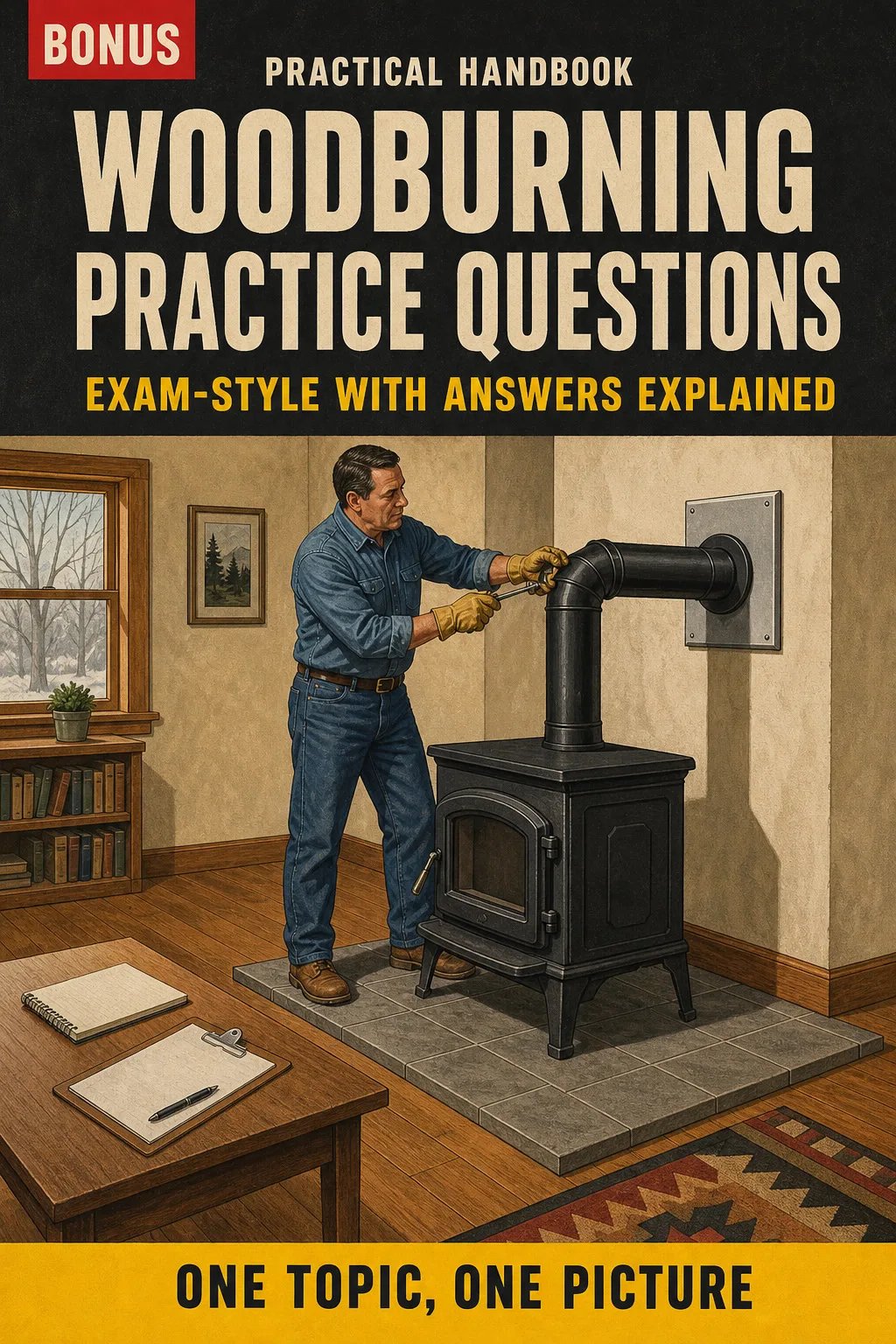
Woodburning Practice Questions: Exam-Style with Answers Explained

BONUS 1: «Woodburning Practice Questions: Exam-Style with Answers Explained»

Value on its own: US$ 17.90

Test yourself on Core and Wood topics in the exam format, and see why each answer is right, so draft, venting and clearance questions don't catch you off guard.

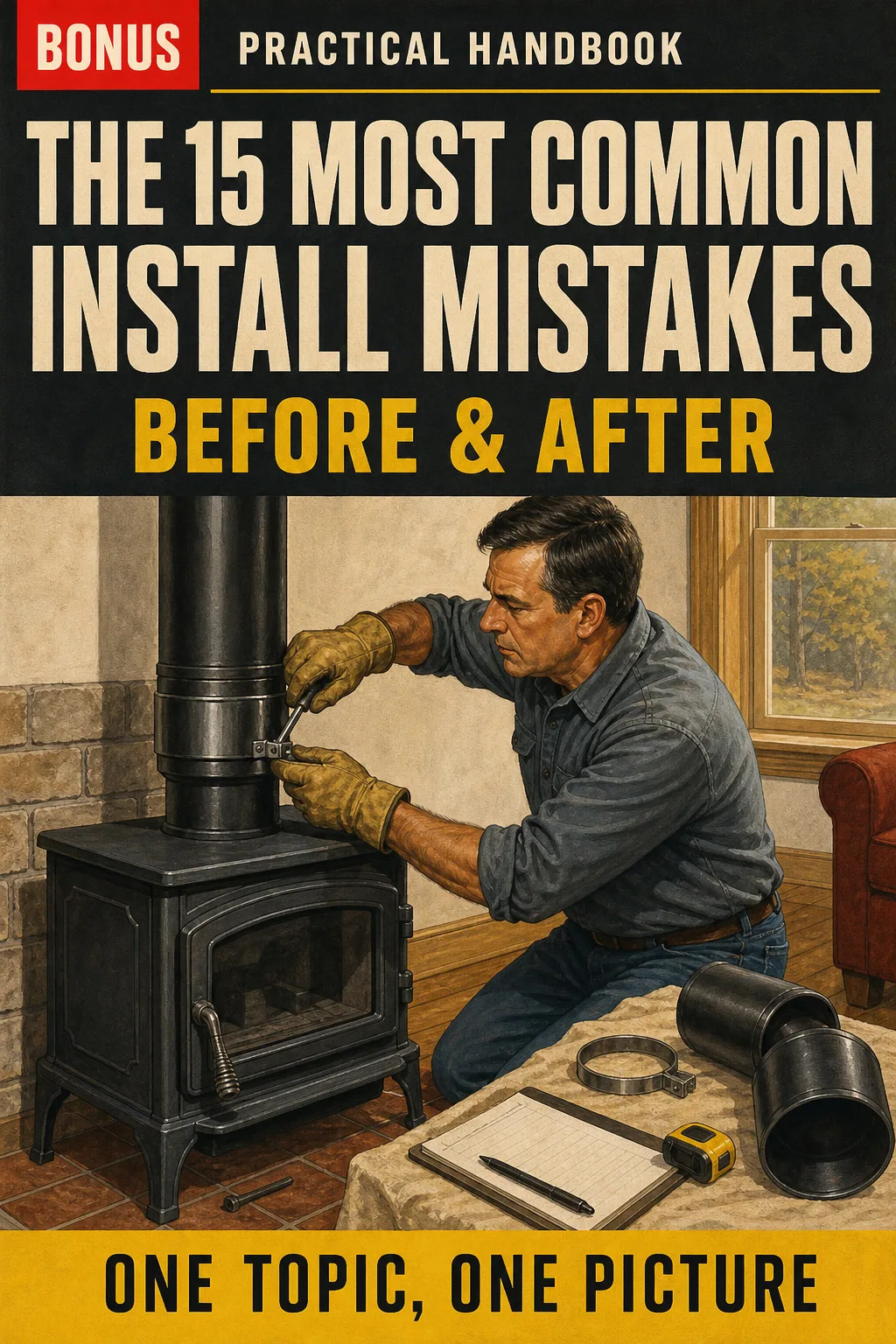
The 15 Most Common Install Mistakes: Before & After

BONUS 2: «The 15 Most Common Install Mistakes: Before & After»

Value on its own: US$ 14.90

Each common mistake (wrong connector clearance, a missing thimble, an undersized hearth pad) is drawn next to the correct install, so you spot it on the job before the inspector does.

Wood Stove Installer Illustrated with 2 Free Books

  • Wood Stove Installer Illustrated: 68 illustrated pagesUS$ 63
  • BONUS 1: Woodburning Practice Questions: Exam-Style with Answers ExplainedUS$ 17.90
  • BONUS 2: The 15 Most Common Install Mistakes: Before & AfterUS$ 14.90
  • High-resolution PDF to printIncluded
Total value US$ 95.80
YOUR PRICE:
US$ 27
You save US$ 68.80
YES, I WANT WOOD STOVE INSTALLER ILLUSTRATED FOR US$ 27

📄 This is a digital PDF book sent to your email: nothing is printed or shipped.

Secure purchaseEncrypted payment30-day guarantee

PDF by email: We email you Wood Stove Installer Illustrated as a PDF, together with the two free books. It's a single payment: no installments, no extra charges.

Who This Book Is For

You're studying for the NFI Woodburning exam

You're studying for the NFI Woodburning exam

Each Core and Wood topic sits on its own page, so you can study at night in short sessions and look at the drawing instead of rereading the standard.

Your exam date is close

Your exam date is close

Part IX puts the formulas, the numbers to have at hand and the install sequence on a few pages you can review the night before.

You already sell or install stoves

You already sell or install stoves

Print the pages you use most and keep them in the truck: clearances, hearth pads and connectors, drawn and ready when the customer or the inspector asks.

Everything You Get Today

US$ 95.80US$ 27
YES, I WANT WOOD STOVE INSTALLER ILLUSTRATED FOR US$ 27

📄 This is a digital PDF book sent to your email: nothing is printed or shipped.

30DAYS
GUARANTEE

30-Day Guarantee

Try Wood Stove Installer Illustrated for 30 days, bonus books included.

We refund everything if the file won't open, if the book isn't what you see here, if you were charged twice or if the email doesn't arrive. Just email us.

You pay once. No subscriptions.

Frequently Asked Questions

Is this for me if I already sell or install wood stoves?

Yes. It's not a beginner's book. It doesn't replace your study manual or the manufacturer's manual: it puts what's spread across them on one page per topic, in the order you work, with the clearance, R-value and 3-2-10 math drawn step by step. You review what you know and fill the gaps the exam asks about.

Where does the content come from?

It's checked against NFPA 211 (2024 edition), IRC Chapter 10, the UL listing standards (UL 1482, UL 103HT, UL 127, UL 1777), EPA 40 CFR Part 60 Subpart AAA and HUD 24 CFR 3280. If your jurisdiction uses an older edition, the appliance's listing label and your local code always come first.

Is this official material?

No. It's an independent study guide, not affiliated with or endorsed by NFI, HPBA, NFPA or the EPA. It doesn't give you a certificate: NFI certification comes only from passing the NFI exam. This book helps you study for it.

Does it replace a course or hands-on training?

No. It's a study and review companion. It doesn't replace training, the manufacturer's instructions or your local inspector.

Are the practice questions the ones on the exam?

No. They're written for this book in an exam style, so you can check what you know. They're not official NFI questions.

How do I get it?

The book and the 2 bonuses come as PDFs by email, to the address you enter at checkout.

Do I have to pay every month?

No. It's a one-time payment.

Can I have it on paper?

Yes. The PDF is made to print, so you can print the whole book or just the pages you want in the truck.

How does the refund work?

You have 30 days. We refund everything if the file won't open, if the book isn't what you see on this page, if you were charged twice or if the email doesn't arrive: just email us.

Before You Close This Page

No more rereading the standard without it sticking.

Clearances and hearth pads: drawn, so you get them at a glance.

You walk into the exam or onto the job knowing where everything is.

Drawings make studying faster.

The book is right below.

One-time payment: US$ 27 · Guarantee: 30 days · PDF by email

YES, I WANT WOOD STOVE INSTALLER ILLUSTRATED FOR US$ 27

📄 This is a digital PDF book sent to your email: nothing is printed or shipped.